Keyboard Map: A Visual Guide to Every Key on Your Keyboard

This post contains affiliate links. As an Amazon Associate, I earn from qualifying purchases. This means I may earn a small commission if you purchase through my links at no extra cost to you.
If you’ve ever sat down at an unfamiliar keyboard and hunted for a key you use every day, you already know why a keyboard map matters. Most people spend years typing without thinking about how their keyboard is laid out — and that’s fine, until it isn’t. Until you’re trying to explain where the Scroll Lock key is, or you’ve switched to a new layout and can’t find anything.
A keyboard map is exactly what it sounds like: a visual representation of every key on a keyboard, organized by zone, function, and purpose. It’s a useful reference whether you’re a new typist getting your bearings, an enthusiast building a custom board thinking about keycap placement, or someone who just wants to stop guessing where Print Screen lives.
This guide walks through the entire keyboard, zone by zone, so you actually understand what’s there and why.
Understanding the basic layout of a keyboard map
Before you can make sense of individual keys, it helps to understand how a keyboard is organized at a high level. A standard full-size keyboard doesn’t throw 104 keys at you randomly — there’s a deliberate structure to it, and once you see it, the whole board starts to make sense.
A typical keyboard map breaks down into five main zones:
- The alphanumeric zone — letters, numbers, and symbols. The center of the board, and what most people picture when they think of a keyboard.
- The function row — F1 through F12 running along the top.
- The modifier and control keys — Shift, Ctrl, Alt, the Windows key, and a handful of others scattered around the edges of the main block.
- The navigation cluster — Insert, Delete, Home, End, Page Up, Page Down, and the arrow keys.
- The number pad — the dedicated numeric block on the right side of a full-size board.
Compact keyboards — 75%, 65%, 60% — shrink or eliminate some of these zones, which is a big part of why choosing the right keyboard size matters. But the zone logic stays consistent regardless of form factor. Understanding a full-size board gives you the mental framework for every smaller layout too.
What makes a keyboard map genuinely useful isn’t just knowing where the keys are — it’s understanding what they do and how they relate to each other. That’s what the rest of this guide is for.
The alphanumeric zone: letters, numbers, and symbols
The alphanumeric zone is the core of any keyboard. Every keyboard has it, regardless of size or form factor. Even a 40% board — the smallest serious layout in the hobby — keeps the main letter block intact.
The letter keys follow the QWERTY layout, standard in English-speaking countries since the 1870s. The name comes from the first six keys on the top letter row. QWERTY was designed around mechanical typewriter constraints that no longer exist, which is why alternative layouts like Dvorak and Colemak have dedicated followings among people who want something more ergonomically optimized. But QWERTY is what you’ll find on virtually every keyboard, and muscle memory for it runs deep.
The letter keys are arranged in three rows:
- Top row: Q W E R T Y U I O P
- Home row: A S D F G H J K L
- Bottom row: Z X C V B N M
The home row matters. Touch typists anchor their index fingers on F and J — which is why those two keys have small raised bumps. If you’ve ever wondered what those bumps are for, that’s your answer: they’re positional markers so your hands can find the home row without looking down.
The number row sits above the letter keys, running from 1 through 0, and doubles as a symbol row when you hold Shift:
| Key | Shift |
|---|---|
| 1 | ! |
| 2 | @ |
| 3 | # |
| 4 | $ |
| 5 | % |
| 6 | ^ |
| 7 | & |
| 8 | * |
| 9 | ( |
| 0 | ) |
The symbol and punctuation keys fill in the remaining spots around the letters. The brackets, semicolons, apostrophes, slashes, and dashes — each with a secondary shifted character. It’s worth spending a few minutes with a keyboard test just to learn what the shifted versions of these keys actually are. Most people know Shift+1 is an exclamation point. Far fewer know off the top of their head that Shift+6 is a caret or that Shift+` is a tilde.
The spacebar is the widest key on the board and sits centered along the bottom row. It’s also one of the most frequently pressed keys, which is part of why spacebar feel and sound gets so much attention in the mechanical keyboard hobby. The stabilizers under a long spacebar can make or break a board’s overall typing experience.
Function keys and what they actually do
The function row runs across the very top of a full-size keyboard: F1 through F12. These are some of the most misunderstood keys on the board. A lot of people hit them by accident and ignore them on purpose. They’re genuinely useful once you know what they do — though the answer depends partly on what software you’re running.
Here’s what function keys do in most standard Windows contexts:
- F1 — Opens the Help menu in almost every application. Universal enough to be worth remembering.
- F2 — Renames a selected file in Windows Explorer. Also used to enter BIOS on many systems at startup.
- F3 — Opens the search or Find function in most apps and browsers.
- F4 — Refreshes or opens the address bar. Alt+F4 closes the active window — probably the most universally known keyboard shortcut there is.
- F5 — Refreshes the current page or view. In browsers, it reloads the page. In PowerPoint, a presentation starts from the beginning.
- F6 — Moves the cursor to the address bar in most browsers.
- F7 — Runs spell check in Microsoft Office applications.
- F8 — Used to access Windows Safe Mode during startup on older systems.
- F9 — Refreshes fields in Word documents. Sends and receives email in Outlook.
- F10 — Activates the menu bar in most Windows applications. Shift+F10 opens the context menu, same as right-clicking.
- F11 — Toggles full-screen mode in most browsers and some applications.
- F12 — Opens Save As in Microsoft Office. Opens browser developer tools in Chrome and Firefox, which every web developer uses constantly.
The important thing: function key behavior is context-dependent. Software can override or reassign these entirely. On laptops and some keyboards with a media-first function row, you might need to hold Fn to get traditional F-key behavior — or vice versa, depending on how the firmware is configured.
On compact keyboards that drop the function row entirely — 65% and 60% boards — you access F-keys through a function layer, typically by holding a dedicated Fn key and pressing the corresponding number key. It works, but it adds a step to consider before committing to a smaller layout if you use F-keys regularly.
Navigation and control keys explained
The navigation cluster is the block of keys between the main alphanumeric zone and the number pad on a full-size board. It sits in the upper-right area and contains some of the most practically useful keys outside the main typing block.
Insert is a toggle that switches between insert mode (new characters push existing text to the right) and overtype mode (new characters replace existing ones). Most people leave it in insert mode permanently and never think about it — the number of times I’ve accidentally hit Insert and watched my text start disappearing is embarrassing. Worth knowing where it is.
Delete removes the character to the right of the cursor, whereas Backspace removes the character to the left. A distinction that sounds minor until you’re trying to clean up text efficiently.
Home and End move the cursor to the beginning or end of the current line. Hold Ctrl while pressing them to jump to the beginning or end of the entire document. These two are genuinely underused.
Page Up and Page Down scroll the document or page by one screen at a time — useful for navigating long documents without reaching for the mouse.
The arrow keys — Up, Down, Left, Right — are self-explanatory in terms of what they do, but they’re worth considering in terms of layout. Dedicated arrow keys are one of the most debated topics in compact keyboard design. The 65% layout exists largely because many enthusiasts drew the line there: willing to give up the function row but not the arrows. For anyone doing text editing, coding, or spreadsheet work, the case for keeping dedicated arrows is strong.
On full-size and TKL boards, there’s also a cluster of three lock keys above the navigation cluster:
- Scroll Lock — Originally scrolled content in spreadsheet applications instead of moving the cursor. In modern use, it’s largely obsolete. Mostly it just exists now.
- Num Lock — Toggles the number pad between numeric input mode and navigation mode (where the number pad acts like arrow keys). On most setups it stays on.
- Caps Lock — Locks all letter keys to uppercase. Found on the left side of the main block rather than the navigation cluster, but it works as a toggle in the same category.
These three usually have indicator LEDs built into the keyboard. On some custom boards and budget options, those indicators get repurposed for other functions or removed entirely.
Special keys: modifier, media, and shortcut keys
This is where things get interesting on a keyboard map — and where a lot of the real power in keyboard use lives.
Modifier keys change the behavior of other keys when held down. They don’t do anything on their own. The main ones:
- Shift — Capitalizes letters and activates the secondary character on symbol keys. Present on both sides of the keyboard; most people use the left one, but having both matters for key combinations.
- Ctrl (Control) — The foundation of most keyboard shortcuts. Ctrl+C, Ctrl+V, Ctrl+Z — copy, paste, undo. Those three alone save most people hours over a working week.
- Alt (Alternate) — Used in combination with other keys for shortcuts and special characters. Alt+Tab for switching between open windows is the classic example.
- Windows key (⊞) — Opens the Start menu on its own. Combined with other keys, it’s the gateway to a huge range of Windows shortcuts: Win+D shows the desktop, Win+L locks the computer, Win+V opens clipboard history. Mac keyboards use the Command key in a similar role.
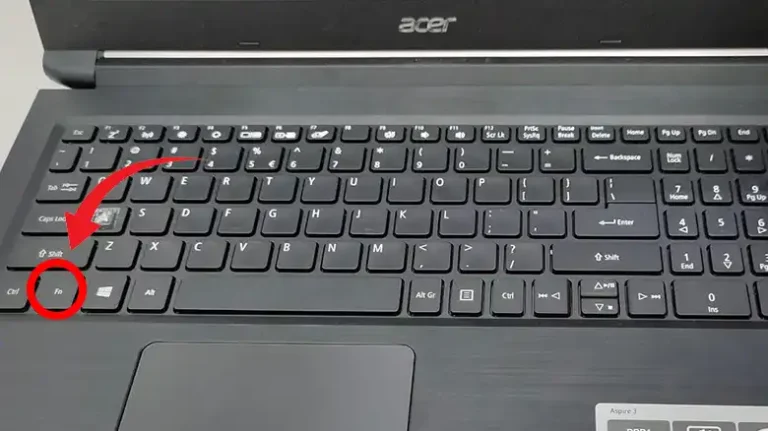
- Fn (Function) — Found on laptops and compact keyboards, this accesses a secondary layer of functions on keys that serve double duty. On a 60% board, Fn is how you get to F-keys, arrow keys, and navigation functions.
The Tab key sits on the left edge and is technically a whitespace character key, but it functions as a navigation tool in most contexts — moving between fields in forms, indenting text, completing file names in a terminal. In gaming, it often opens the scoreboard or inventory.
The Escape key lives in the top-left corner of most keyboard layouts and is one of the most useful keys in computing. Cancel, close dialog, exit full screen, exit insert mode in Vim — Escape is the universal “never mind” key.
Enter confirms actions, creates new lines, and submits forms. Most people press it hundreds of times a day without thinking about it.
Backspace deletes the character to the left of the cursor, positioned above Enter on the right side of the main block. On some 60% keyboard layouts, Backspace gets split — a smaller Backspace and a separate key taking part of that space — which is a layout quirk worth paying attention to when shopping.
Media keys appear on many full-size boards and some 75% boards, either as dedicated keys or as part of the function row. They typically include volume up, volume down, mute, play/pause, skip, and brightness controls (common on laptops).
Dedicated media keys are one of those things you don’t know you miss until you don’t have them. Many enthusiasts solve this with a rotary encoder and a physical volume knob, which has become increasingly common on 75% boards like the AULA F75. Simple addition, real difference in day-to-day use.
How to use a keyboard map to work faster
Understanding the keyboard map as a reference is one thing. Using that knowledge to actually work faster is another.
The most direct application is learning keyboard shortcuts, and the keyboard map is the starting point. When you can see all the keys laid out visually, shortcuts that seemed arbitrary start making spatial sense. Ctrl+Z for undo makes sense when you see Z is in the bottom-left corner — easy to reach with your left hand while your right stays on the mouse. Ctrl+C and Ctrl+V sit right next to each other, which is intentional.
Don’t try to memorize fifty shortcuts at once. Pick five that apply to your daily workflow, use them deliberately for a week until they’re automatic, then add more. The keyboard map helps because it gives you a spatial anchor — you’re not memorizing abstract letter combinations, you’re memorizing finger movements.
Remapping keys is another powerful use case, and one the mechanical keyboard hobby takes seriously. If you never use Caps Lock, remap it to something useful — a lot of enthusiasts map it to Ctrl, Escape, or a macro key. If you’re on a compact board that dropped certain keys, assign those functions to keys you rarely use. Tools like VIA, QMK, and manufacturer-specific software make this accessible even without a development background.
The keyboard map is essential here. Before you remap anything, you need to know what’s already where — which keys are underused in your personal workflow and which ones you’d actually miss. Ten minutes with a keyboard map and honest self-assessment can save you from remapping a key you use more than you realize.
Touch typing is the long-term payoff of understanding a keyboard map. Once you know where every key is — not just the ones you use constantly, but all of them — you can work on building the muscle memory to hit them without looking. The home row bumps on F and J are your anchor. Everything radiates outward from there.
For mechanical keyboard builders, a keyboard map is indispensable when planning keycap sets. If you’re putting together a custom build and want to know whether a keycap set covers your layout correctly, you need to know exactly which keys your board has and where they sit. A 65% layout differs from a 75%, and keycap compatibility isn’t always obvious without a visual reference.
And sometimes the value is simpler than all of that. Sometimes you just need to know where a key is. Keeping a keyboard map handy — saved as an image, bookmarked, printed out — is faster than Googling it every time.
Conclusion
A keyboard map seems almost too basic to write about — until you consider how many people have used a keyboard every day for years without really looking at it. Most of us develop habits around the keys we use constantly and ignore everything else. That works fine until you need something from another zone, switch to a new layout, or actually want to get faster at the thing you spend most of your day doing.
Understanding the full keyboard map — the alphanumeric zone, the function row, the navigation cluster, the modifier and media keys — gives you a complete picture of the tool in front of you. Once you have that picture, you can make smarter choices: which shortcuts to learn, which keys to remap, which layout actually fits how you work, and which boards to even consider when you’re building or buying.
The more you understand your keyboard, the more useful it gets. The map is where that starts.
![Rugged Folio for iPad Keyboard not Working [How to Fix]](https://keyboardhunter.com/wp-content/uploads/2023/10/Rugged-Folio-for-iPad-Keyboard-not-Working-768x431.webp)

![[Fixed] Bluetooth Keyboard Not Recognized at Startup Mac](https://keyboardhunter.com/wp-content/uploads/2023/10/Bluetooth-Keyboard-Not-Recognized-at-Startup-on-Mac-768x431.webp)